Exterior Shutter Care and Maintenance
Most exterior shutters can be cleaned with mild soap, water and a soft cloth. Routine care also includes inspecting the finish, checking mounting hardware and keeping nearby vegetation clear. Maintenance needs vary with the shutter material and exposure to sun, moisture and salt air.
How to Clean Exterior Shutters
For routine cleaning, use mild soap and clean water with a soft cloth or a soft-bristle brush suitable for the finish. Wash from top to bottom, then rinse thoroughly with a garden hose before the soap dries. Follow the additional cleaning requirements for aluminum shutters below.
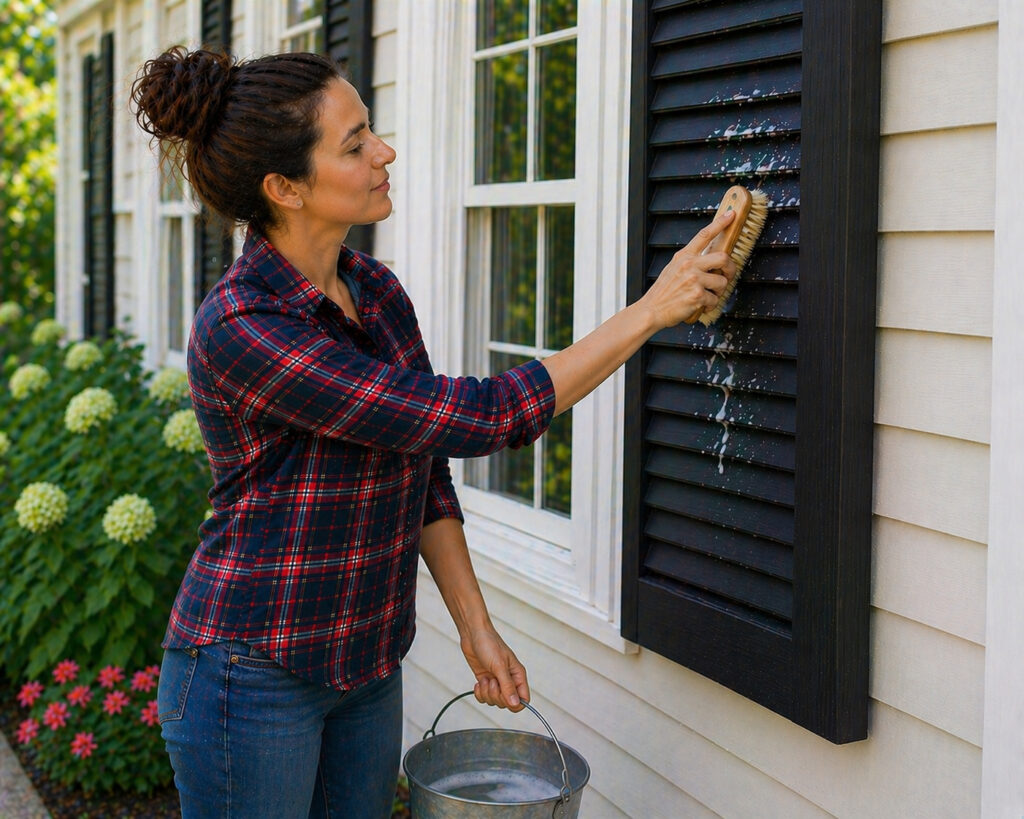
Avoid pressure washers, abrasive pads and harsh cleaning chemicals. High-pressure water can damage the finish and force moisture into exposed wood. For stubborn stains or mildew, use a cleaner approved for the specific shutter material and finish, following its label instructions.
Annual cleaning is a useful starting point for wood, composite, PVC and vinyl shutters, with additional washing as conditions require. Aluminum shutters require quarterly cleaning.
Keep Plants Clear of Shutters
Trim vines, shrubs and tree branches that touch exterior shutters. Branches can scratch the finish, while climbing plants can cling to painted surfaces and become difficult to remove.
Keep the surrounding area open enough for air to circulate and surfaces to dry after rain. Remove leaves and debris that collect against the shutters.
Wood, Composite and PVC Shutter Care
Inspect wood, composite and PVC shutters periodically for peeling, cracks, scratches and exposed material, especially around joints and lower edges. Maintaining the finish helps protect and preserve the appearance of all three materials.
Before touching up a damaged area, clean the surface and let it dry completely. Prepare the area and prime exposed material as required by the coating manufacturer, then apply compatible matching paint. ShutterLand includes matching touch-up paint with factory-painted orders.
Soft or deteriorated wood should be evaluated before repainting. Widespread peeling or wear may require more complete refinishing. Follow the exterior shutter finishing guidance and the coating manufacturer’s instructions for preparation, application and curing.
For stain-grade wood shutters, maintain the exterior stain or protective coating according to the coating manufacturer’s instructions.
Vinyl Shutter Care
Clean vinyl shutters annually or whenever dirt accumulates. A garden hose is often sufficient for a light cleaning. For more thorough washing, use mild soap and water with a soft-bristle brush to clean the textured surface and recessed details.
Wash from top to bottom, scrub gently and rinse thoroughly before the cleaning solution dries to prevent streaks.
Surface oxidation, often called chalking, can develop with prolonged exposure to sunlight and weather. It appears as a whitish, powdery film that can be especially noticeable on black and other dark shutters. Loose residue may transfer to a cloth when the surface is wiped.
Gentle washing may remove loose chalk and improve the appearance. Persistent residue may require a vinyl-safe oxidation remover. Follow the product instructions and test it first in a small, inconspicuous area. Follow the product instructions and test a small, inconspicuous area first. Avoid aggressive scrubbing, abrasive pads and pressure washers, which can damage the surface or leave an uneven appearance. Removing chalk does not reverse permanent fading or material deterioration from prolonged periods of neglect.
Vinyl shutters in standard molded colors do not require routine repainting. Shutters ordered in the paintable option should be cleaned and maintained according to the applied coating’s instructions.
Aluminum Shutter Care
Clean aluminum shutters at least once every three months, as required by ShutterLand’s warranty. Use a mild cleaning solution and a soft, non-scratch cotton cloth. Keep the shutter surface below 80°F (27°C), and rinse thoroughly with cold water before the cleaner dries. Cleaning-solution contact time must remain under one hour.
Coastal installations need additional fresh-water rinsing to remove salt deposits. Avoid bleach, abrasive pads and strong solvents. Inspect the powder-coated finish for damage and follow the manufacturer’s guidance for repairs.
Inspect Shutter Hardware and Mounting
Check that fasteners, brackets and supports remain secure and that shutters stay properly aligned. On functional shutters, inspect hinges, latches, shutter dogs and Bahama support arms for wear, corrosion or restricted movement.
Operate hinged shutters periodically to check that they open, close and secure properly. Test hurricane shutters and their closure hardware before storm season. Follow the relevant exterior shutter installation instructions when assessing support or correcting alignment.