Written by ShutterLand, a U.S. exterior shutter specialist with over two decades of hands-on experience in shutter measurement, material selection, finish options, and installation for residential homes and commercial properties.
Choosing the best material for exterior shutters depends on their intended purpose. Appearance, durability, maintenance, function, climate, budget, and architectural requirements can all influence the decision.
Different materials perform best in different applications. Premium wood offers traditional construction and natural character, while PVC combines solid construction, moisture resistance, and the option for stationary or functional installation. Impact-rated aluminum is designed for applications where hurricane protection is required. Composite is a durable option for solid, stationary shutters, and Southern Yellow Pine provides an economical path to real wood construction. Vinyl offers the lowest-cost choice for decorative, stationary shutters.
There is no single exterior shutter material that is best in every category. Comparing the strengths and limitations of each option can help determine which material is the best fit for a specific home and application.
Quick Guide to Exterior Shutter Materials
Material
Best For
Functional
Maintenance
Relative Cost
Premium Wood
Traditional appearance, historic projects, paint or stain
Yes
Regular finish inspection
Moderate to high
PVC
Traditional appearance, maximum longevity
Yes
Inspect painted finish
Higher
Aluminum
Hurricane protection and coastal applications
Yes
Periodic washing
Generally highest
Composite
Solid, painted stationary shutters
No
Inspect painted finish
Moderate
Economy Pine
Lower-cost solid or functional shutters
Yes
Regular finish inspection
Lower
Vinyl
Economical decorative shutters
No
Routine cleaning
Lowest
Actual cost varies by shutter size, style, finish, and other options.
Start by determining how the shutters will be used. A purely decorative shutter has very different requirements from one that needs to swing closed over a window or protect a home during a hurricane.
The most important considerations are:
Function: Do the shutters need to open and close, or will they remain stationary?
Weather exposure: Will they encounter frequent rain, intense sun, freezing temperatures, salt air, or tropical storms?
Appearance: Is authentic wood important, or will a painted alternative provide the desired look?
Maintenance: How much ongoing inspection, cleaning, and refinishing are you willing to perform?
Budget: Are you looking for the lowest initial cost or placing greater emphasis on long-term performance?
Architectural requirements: Historic districts, coastal construction, and hurricane-prone areas may have additional requirements.
Looking at these factors together is more useful than selecting a shutter material based on price or durability alone.
Best Exterior Shutter Materials by Application
Best for Traditional Application: Premium Wood
Premium wood shutters remain the standard for projects where authentic construction and natural character are priorities. ShutterLand offers Red Grandis, Cedar, and Mahogany, each suitable for exterior exposure when properly finished and maintained.
Wood can be installed either stationary or with functional hinges. It is also available in a broad range of traditional shutter styles and can be painted or, in appropriate styles and species, finished to showcase the natural grain.
Premium wood is especially well suited for historic homes, traditional architecture, and projects where the appearance and construction of genuine wood are important.
The tradeoff is maintenance. Exterior wood needs a sound protective finish, and painted or stained surfaces should be inspected periodically for wear or damage.
Best Balance of Durability and Function: PVC
PVC shutters are a strong choice when the appearance and function of a traditional shutter are desired with less concern about moisture-related deterioration.
The shutters are constructed from solid components and can be installed either stationary or with functional exterior hinges. PVC does not absorb water, making it particularly useful in wet and humid environments.
PVC does expand and contract somewhat as temperatures change, so proper installation and support are important, particularly with larger shutters. The painted surface should also be inspected and maintained as needed.
For homeowners comparing long-term durability, functionality, and maintenance, PVC is often one of the strongest all-around choices.
Best for Hurricane Protection: Aluminum
When shutters are expected to provide hurricane protection, the appropriate material is an aluminum shutter system specifically engineered and tested for that purpose.
ShutterLand offers functional aluminum shutters in Colonial and Bahama configurations. They can remain open during normal conditions and be closed when storm protection is needed.
It is important to distinguish hurricane-rated aluminum shutters from decorative products. An aluminum shutter should not be assumed to provide impact protection simply because it is made from metal. Hurricane protection depends on the complete tested shutter assembly, hardware, installation, and applicable product approvals.
For coastal properties where impact protection is the primary objective, approved aluminum hurricane shutters are the clear choice among the materials offered by ShutterLand.
Best Solid Stationary Alternative to Wood: Composite
Composite shutters are a good option for homeowners who want a substantial painted shutter but do not need the shutters to operate.
ShutterLand composite shutters are constructed from Extira, an engineered exterior material containing wood fiber combined with resins and other protective ingredients. The resulting material is dense, stable, and engineered to resist moisture and insects.
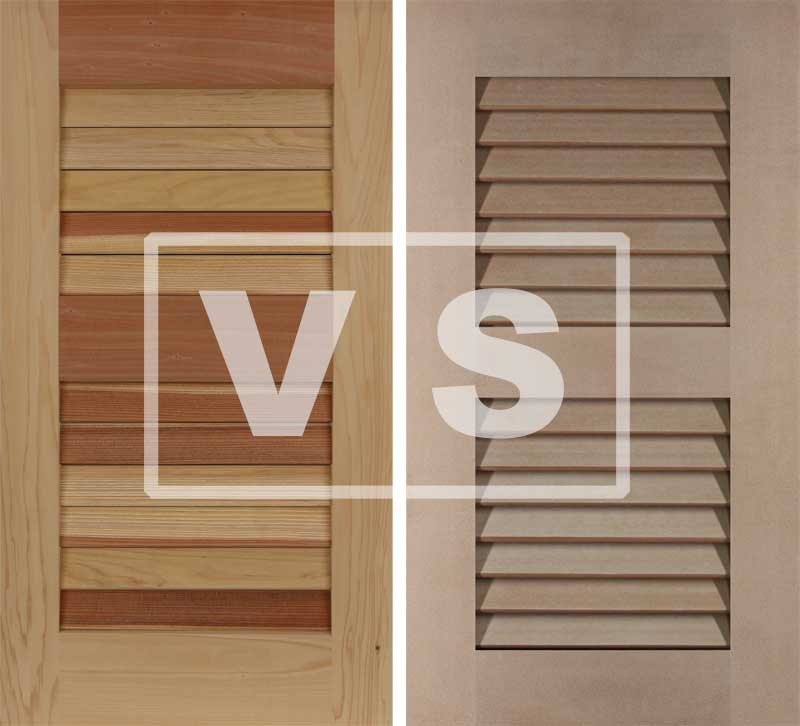
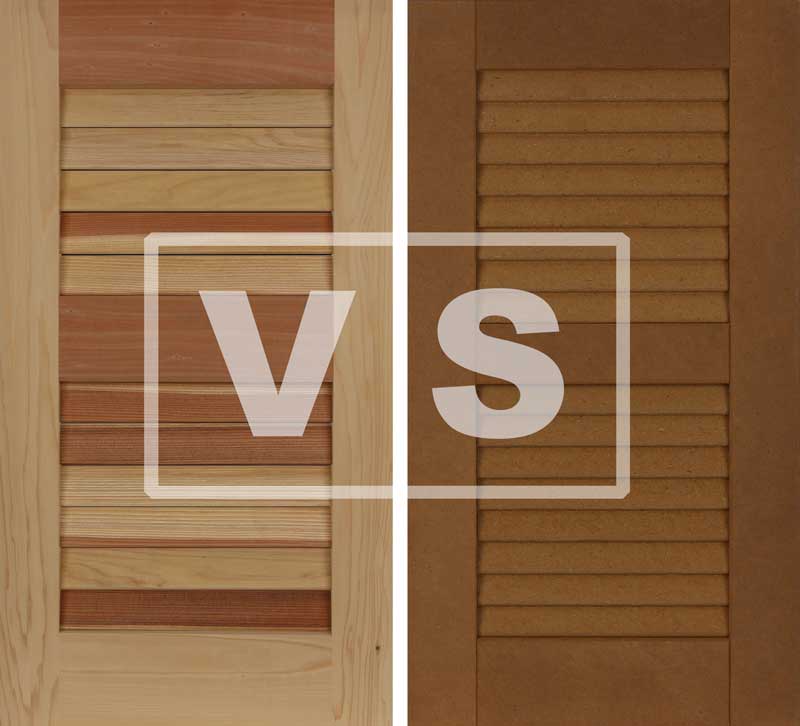
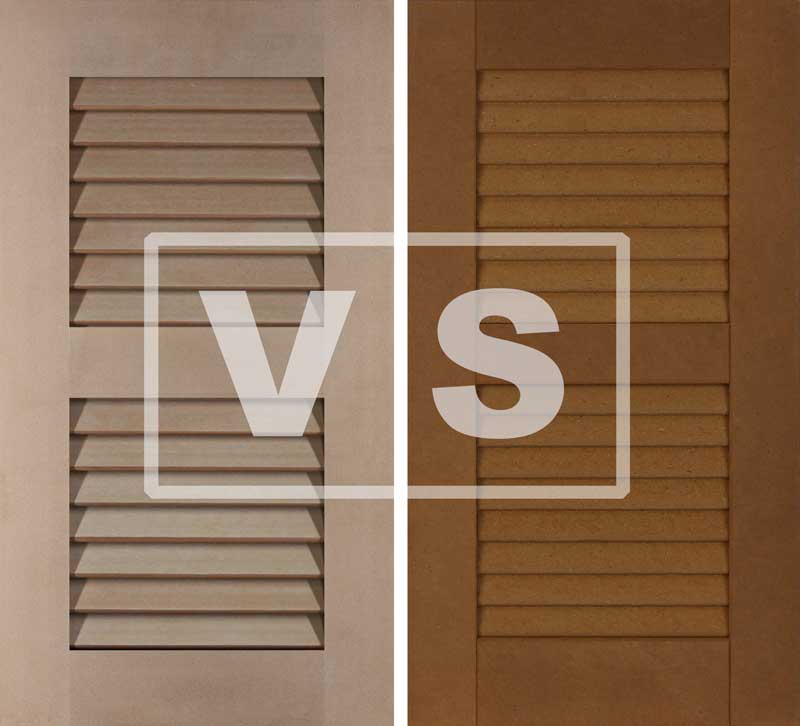
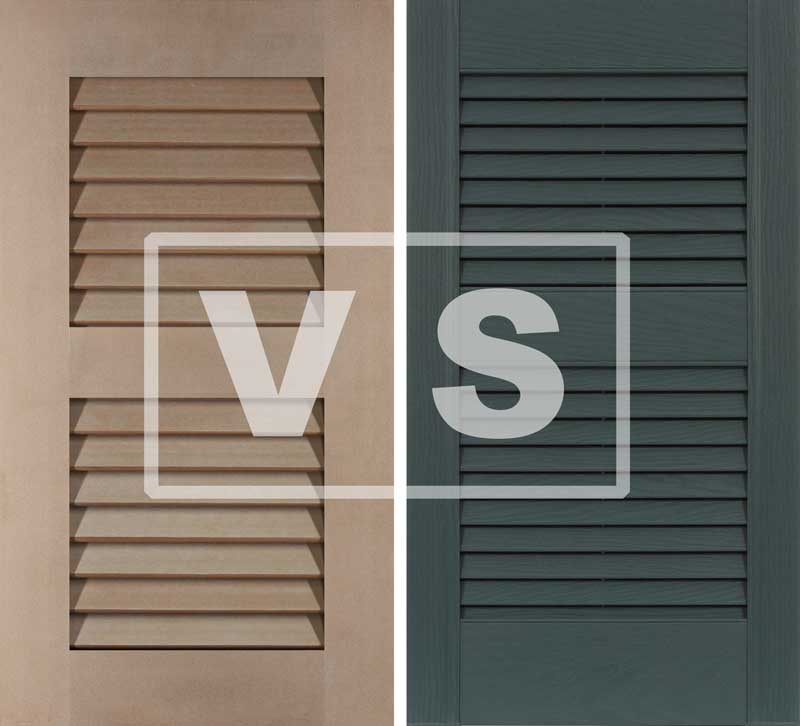
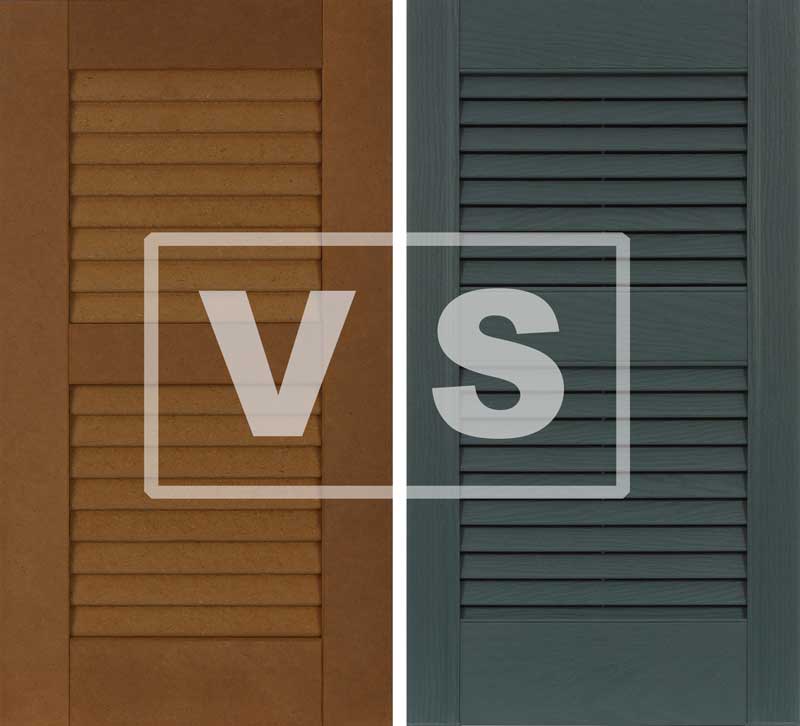
Composite shutters are intended for stationary installation. They are heavier than wood, and the back is not constructed for display when the shutter is closed. Composite louvered shutters also use machined sections of simulated louvers rather than individual slats with open spacing between them.
For decorative applications where those differences are not important, composite provides the appearance of a solid painted shutter at a moderate price.
Best Lower-Cost Solid Shutter: Southern Yellow Pine
Southern Yellow Pine shutters provide an economical alternative when a homeowner wants genuine wood construction without moving into the price range of premium wood species.
Unlike vinyl or composite, Pine shutters can be installed with functional hinges. They are therefore useful when a solid, traditional shutter is required at a lower initial price.
The compromise is longevity and maintenance. Pine is more susceptible to seasonal movement and moisture than premium exterior wood species, making a quality finish and ongoing maintenance especially important.
Economy Pine shutters are a practical choice for budget-sensitive projects where solid construction and functionality are more important than achieving the longest possible service life.
Best Budget Decorative Shutter: Vinyl
Vinyl shutters are the most economical material offered by ShutterLand and work well when the objective is simply to add color, proportion, and architectural detail around a window.
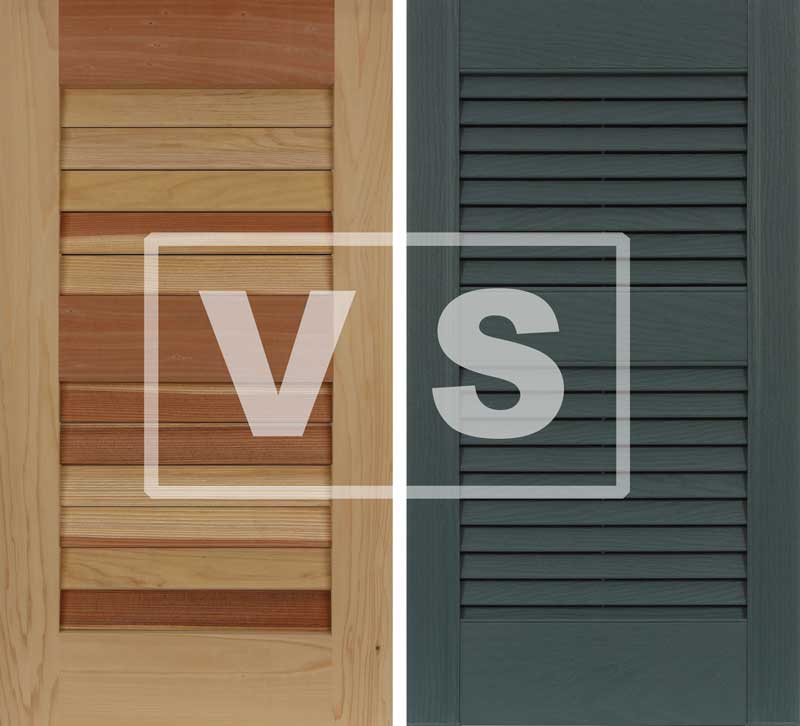
Vinyl shutters are lightweight molded products with hollow backs. They rely on the building surface for support and are designed exclusively for stationary installation.
The material does not absorb water, requires little routine maintenance, and is available in molded colors that do not require conventional repainting.
Vinyl is an effective solution for decorative applications, but it should not be selected when authentic solid construction or functional operation is required.
Functional vs. Stationary Exterior Shutters
One of the easiest ways to narrow the material selection is to decide whether the shutters need to operate.
Premium wood, Economy Pine, PVC, and aluminum shutters can be functional. Side-mounted shutters can hinge beside a window and rotate toward the opening, while Bahama shutters hinge above the window and project outward from the bottom.
Composite and vinyl shutters are designed for stationary installation.
A functional shutter also needs to be sized and installed correctly for the opening. Material selection is only one part of creating an operable system; hinges, mounting surfaces, clearances, and supporting hardware are equally important.
If the shutters are decorative only, all six materials can be considered.
Which Exterior Shutter Material Is Most Durable?
Durability depends partly on the type of exposure and how the shutter is maintained.
Aluminum provides exceptional structural strength and is the material used for ShutterLand hurricane-rated shutters.
PVC performs particularly well where moisture is a concern because the material does not absorb water or rot.
Composite is engineered specifically for exterior exposure and resists many of the deterioration problems associated with untreated natural wood. Maintaining its painted surface helps preserve the material over the long term.
Premium exterior wood can provide decades of service when the correct species, construction, finish, installation, and maintenance are combined.
Economy Pine offers real wood construction at a lower price but generally requires greater attention to the protective finish.
Vinyl is highly resistant to moisture and requires minimal maintenance, although its lightweight construction limits it to decorative use.
Rather than asking only which material lasts longest, consider whether the material provides the construction, appearance, and function required for the project.
Exterior Shutter Maintenance by Material
Every exterior shutter benefits from occasional inspection and cleaning, but maintenance requirements differ.
Wood shutters should be checked periodically for deterioration of the paint or stain. Areas where the finish has failed should be repaired before prolonged moisture exposure occurs.
PVC and composite shutters should also have their painted surfaces inspected periodically and repaired when necessary.
Aluminum shutters can generally be washed with mild soap and water. Coastal installations may benefit from more frequent rinsing to remove accumulated salt deposits.
Vinyl shutters normally require only occasional washing to remove dirt, pollen, mildew, or other surface buildup to prevent oxidation.
Installation of exterior shutters also affects maintenance and service life. Proper support, appropriate hardware, and correct clearances help shutters perform as intended.
Cost of Exterior Shutter Materials
Initial price is often an important part of the decision, but the lowest-cost shutter is not necessarily the least expensive choice for every project.
Vinyl is generally the lowest-priced exterior shutter material. It is designed for decorative installation and is an economical way to add shutters to a home.
Economy Pine is the lowest-cost option when a solid wood or functional shutter is required.
Composite occupies a moderate price range and provides substantial stationary construction without the cost of premium wood or PVC.
The price of premium wood varies by species. Red Grandis, Cedar, and Mahogany offer different combinations of price, appearance, and exterior performance.
PVC generally has a higher initial cost, reflecting its solid construction, moisture resistance, custom sizing, and ability to function like a traditional shutter.
Aluminum hurricane shutters are generally at the upper end of the price range because they combine custom construction, hardware, durable finishes, and, on approved models, engineered storm protection.
Price should therefore be considered along with expected service, maintenance, function, and the reason the shutters are being installed.
Premium wood and PVC provide the broadest selection of traditional designs, including louvered, raised panel, flat panel, Shaker, board and batten, combination, and Bahama shutters.
Composite is available in several popular stationary styles, but its construction differs from traditional wood in some configurations. Composite louvered shutters, for example, use solid machined louver sections rather than individual louvers with open spaces between them.
Vinyl is offered in popular decorative styles and standard configurations intended for stationary mounting.
Aluminum shutters are concentrated primarily in Colonial louvered and Bahama designs, where functional operation and coastal or hurricane applications are common.
If a specific architectural style is the starting point for the project, first identify which materials are available in that design and then compare the remaining options.
Which Exterior Shutter Material Should You Choose?
The best exterior shutter material is the one that most closely matches the requirements of the project.
Choose premium wood when authentic wood construction, traditional appearance, or a natural finish is most important.
Choose PVC when you want a solid custom shutter with excellent moisture resistance, low maintenance, and the ability to operate.
Choose impact-rated aluminum when hurricane protection is the primary objective.
Choose composite when you want a substantial painted stationary shutter with a wood-like appearance at a moderate price.
Choose Economy Pine when you need genuine solid wood or functional construction while keeping the initial price lower.
Choose vinyl when the goal is an affordable, low-maintenance decorative shutter.
If you already know which material fits your needs, browse ShutterLand’s exterior window shutters to see the available styles and ordering options.